
Airway
Orthodontics
Airway orthodontics at Manning Orthodontics is an advanced approach to care that looks beyond straight teeth to evaluate how jaw development, bite alignment, and oral structures can affect breathing, sleep quality, mouth breathing, grinding, clenching, and overall wellness. For patients in The Woodlands, Magnolia, and Montgomery, Dr. Kendra Pratt Manning offers airway-focused orthodontic treatment options, including MARPE, traditional expanders, lower jaw development appliances, habit appliances, and coordinated care with medical specialists when needed. By focusing on the relationship between the jaws, airway, and bite, airway orthodontics can help support healthier function, improved breathing patterns, better sleep habits, and long-term quality of life.
Better Breathing
Airway orthodontics focuses on jaw and airway development to help improve airflow, nasal breathing, mouth breathing concerns, and sleep-related symptoms.
MARPE Expansion
MARPE is an advanced orthodontic technique used to widen the upper jaw and upper airway in older teens and adults whose jaw growth is complete.
Team-Based Care
Because airway and sleep concerns can be multifactorial, Dr. Manning may coordinate with physicians, ENTs, neurologists, oral surgeons, and other providers when needed.
Orthodontics That Supports Function, Breathing, and Sleep
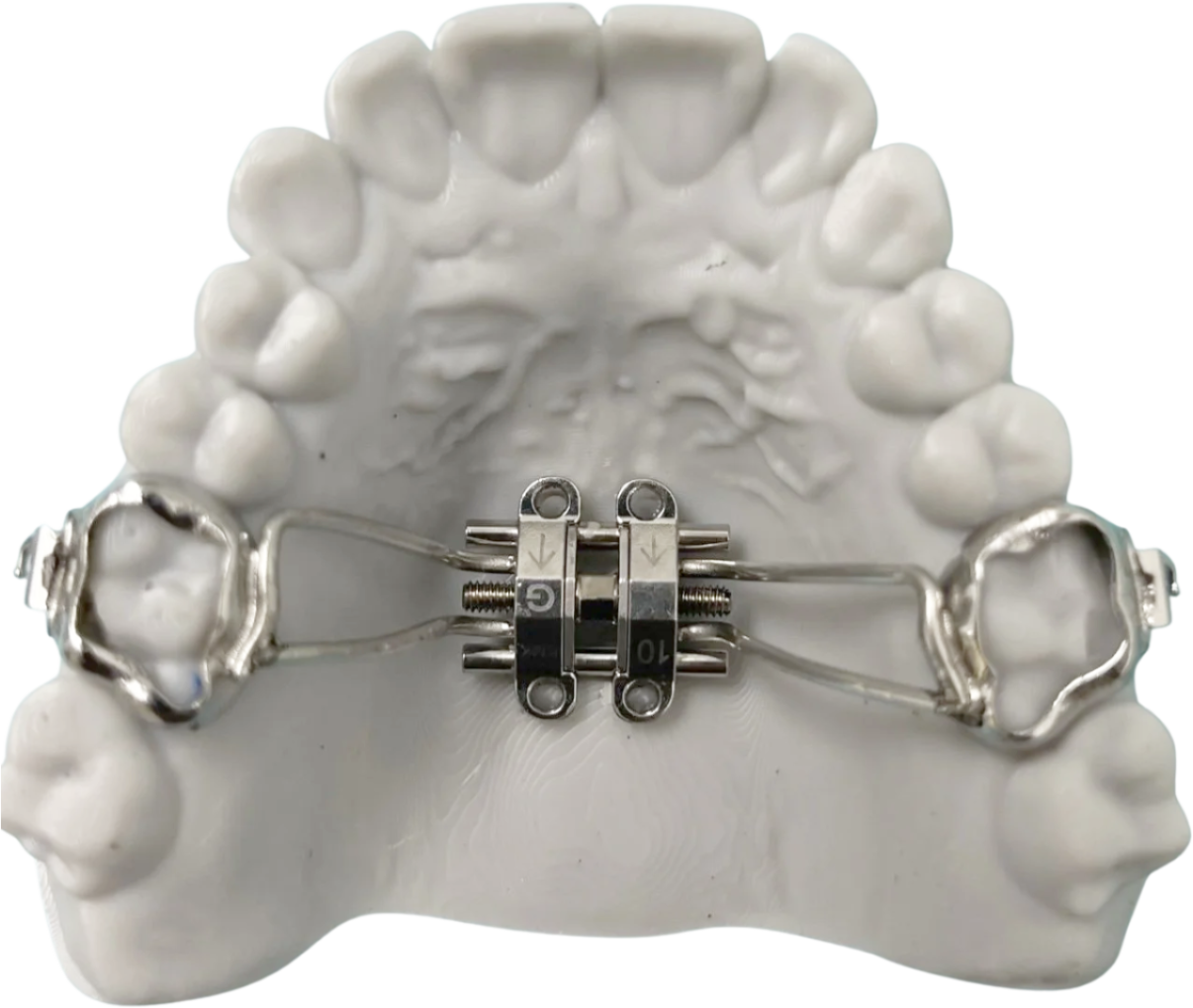
Airway orthodontics and MARPE, or Mini-Implant Assisted Rapid Palatal Expansion, are designed to help patients who may have narrow jaws, restricted airflow, poor sleep quality, mouth breathing, grinding and clenching, crowding, crossbites, or jaw development concerns. Instead of focusing only on tooth alignment, Dr. Manning evaluates the size, shape, and position of the jaws and soft tissues to determine whether orthodontic treatment can help create better space for the tongue, improve bite function, support nasal breathing, and reduce upper airway resistance. In some cases, treatment may involve a traditional expander, MARPE, a Twin Block, Herbst or Forsus appliance, habit appliance therapy, or surgical jaw advancement coordinated with an oral and maxillofacial surgeon. For patients with obstructive sleep apnea or complex airway-breathing-dental concerns, airway orthodontics is not a stand-alone cure, but it can be an important part of a collaborative treatment plan designed around long-term health, comfort, and function.
To learn more about airway orthodontics from Manning Orthodontics, read our FAQ below.
Airway Orthodontics FAQ
What is airway orthodontics?
Airway orthodontics is a specialized approach to orthodontic care that evaluates how the size, shape, and position of the jaws, teeth, and soft tissues may affect breathing, sleep quality, jaw function, mouth breathing, grinding, and clenching.How is airway orthodontics different from regular orthodontics?
Traditional orthodontics often focuses primarily on straightening teeth and correcting bite alignment, while airway orthodontics also considers jaw development, tongue space, nasal breathing, nighttime habits, and airway function.What symptoms may be related to airway orthodontic concerns?
Airway-related orthodontic concerns may be associated with mouth breathing, snoring, poor sleep quality, grinding or clenching, concentration problems at school or work, narrow jaws, crowding, and crossbites.Can a narrow jaw affect breathing?
Yes. When the upper jaw or palate is too narrow, it can reduce space in the nasal airway and oral cavity, which may contribute to mouth breathing, snoring, upper airway resistance, poor sleep quality, and dental crowding.What is MARPE?
MARPE stands for Mini-Implant Assisted Rapid Palatal Expansion. It is an advanced orthodontic technique used to widen the upper jaw in older teens and adults whose jaw growth is complete.How does MARPE work?
With MARPE, a surgeon places four mini screw implants in the upper jaw to help support expansion of the palate. This widening of the upper jaw may also help widen the upper airway and improve nasal airflow.Who may be a candidate for MARPE?
MARPE may be recommended for older teenagers and adults, typically after jaw growth is complete, who have a narrow upper jaw, narrow palate, crowding, crossbite, mouth breathing, upper airway resistance, or sleep-related breathing concerns.How is MARPE different from a traditional expander?
A traditional expander is usually used in growing patients to widen the upper jaw at the intermaxillary suture, while MARPE is used in older patients whose suture has already fused and who need additional skeletal support for expansion.Can airway orthodontics help with mouth breathing?
Airway orthodontics may help some patients with mouth breathing by addressing narrow jaws, tongue space, and upper airway development. Dr. Manning will evaluate whether orthodontic treatment could be part of your solution.Can airway orthodontics help with snoring?
Snoring can have several causes, but narrow jaws, airway resistance, and poor tongue positioning may contribute to the problem. Airway orthodontic treatment may help some patients as part of a broader airway evaluation.Can airway orthodontics improve sleep quality?
By addressing jaw development, airway space, mouth breathing, clenching, grinding, and upper airway resistance, airway orthodontics may support better sleep quality for some patients. Patients with diagnosed sleep disorders may also need care from medical providers.Is airway orthodontics a treatment for sleep apnea?
Airway orthodontics is not a cure-all for obstructive sleep apnea. Patients diagnosed with OSA should be treated with a team-based approach that may include Dr. Manning, a neurologist, an ENT, a sleep physician, or other healthcare providers.Why is a team-based approach important for airway treatment?
Breathing disorders are often multifactorial, meaning they can involve the jaws, airway, nasal passages, tonsils, adenoids, sleep patterns, and medical conditions. A collaborative team helps create a more complete and personalized treatment plan.What specialists might be involved in airway orthodontic care?
Depending on the patient’s needs, Dr. Manning may coordinate care with an ear, nose, and throat specialist, neurologist, sleep physician, oral and maxillofacial surgeon, pediatrician, dentist, or other medical providers.What orthodontic appliances are used for airway-breathing-dental disorders?
Airway-focused orthodontic care may involve traditional expanders, MARPE, Twin Block appliances, Herbst appliances, Forsus appliances, habit appliances, or surgical orthodontic coordination depending on the patient’s anatomy and needs.What does a traditional expander do?
A traditional expander widens the upper jaw at the intermaxillary suture in growing patients. This skeletal expansion can help create more space for teeth while also widening the upper nasal passages and some sinus areas.What are Twin Block, Herbst, and Forsus appliances used for?
These appliances are used to help develop or reposition a lower jaw that is recessed or retrognathic. Moving the lower jaw forward can help improve bite function and may also support the posterior airway.How can a recessed lower jaw affect the airway?
When the lower jaw is set back, it can reduce space behind the tongue and narrow the posterior pharynx. Certain orthodontic appliances may help improve jaw position and support better airway function in appropriate cases.What role do habit appliances play in airway orthodontics?
Habit appliances can help correct thumb sucking, finger sucking, tongue thrusting, irregular swallowing habits, and other oral habits that may affect jaw growth, bite development, tongue posture, and long-term dental alignment.Can airway orthodontics help with teeth grinding or clenching?
Grinding and clenching may be associated with airway issues, stress, bite concerns, or sleep-disordered breathing. Dr. Manning can evaluate your bite, jaw function, and symptoms to determine whether airway orthodontics or other treatment may help.Can airway orthodontics help with concentration issues?
Poor sleep quality and sleep-disordered breathing may affect attention and concentration at school or work. Airway orthodontics may support better sleep and breathing in some patients, but medical evaluation may also be needed.What is upper airway resistance?
Upper airway resistance occurs when airflow is partially restricted during breathing, especially during sleep. A narrow upper jaw or airway structure may contribute to resistance, and expansion may help some patients.Can airway orthodontics help with crowding and crossbites?
Yes. Narrow upper jaws can contribute to crowding and crossbites. Expansion treatment, including traditional expansion or MARPE, may create more space and improve how the upper and lower teeth fit together.What is surgical jaw advancement with airway orthodontics?
In some cases, especially when growth is complete, airway-breathing disorders may benefit from orthognathic jaw surgery to move one or both jaws forward or widen them. This is coordinated with an oral and maxillofacial surgeon.Who might need surgical jaw advancement?
Surgical jaw advancement may be considered for patients with significant jaw discrepancies, completed growth, and airway concerns that cannot be fully addressed with orthodontic appliances alone. Dr. Manning can help determine whether a surgical consultation is appropriate.Does every airway orthodontic patient need MARPE or surgery?
No. Every patient is different. Some may benefit from traditional expansion, some from MARPE, some from lower jaw development appliances, some from habit therapy, and others from coordinated medical care or surgical evaluation.What happens during an airway orthodontic consultation?
Dr. Manning will evaluate your teeth, bite, jaw development, airway-related symptoms, sleep concerns, oral habits, and treatment history to determine whether airway orthodontics may be appropriate and what next steps make sense.Is airway orthodontics available for children?
Yes. Children with narrow jaws, mouth breathing, crossbites, thumb sucking, tongue thrusting, snoring, poor sleep quality, or jaw growth concerns may benefit from early airway-focused orthodontic evaluation.Is MARPE used for children?
MARPE is typically used for older teens and adults after jaw growth is complete. Younger patients often respond well to traditional expansion because their jaw sutures are still developing.How do I know if I need airway orthodontics?
If you or your child struggles with mouth breathing, snoring, grinding, clenching, narrow jaws, crowding, crossbites, poor sleep quality, or concentration issues, schedule a consultation with Manning Orthodontics in The Woodlands or Montgomery to learn whether airway-focused treatment may help.
Ready for the Smile You've Always Wanted?
Click the button below to schedule your FREE consultation!